Home › Walkway and Pathway Paving
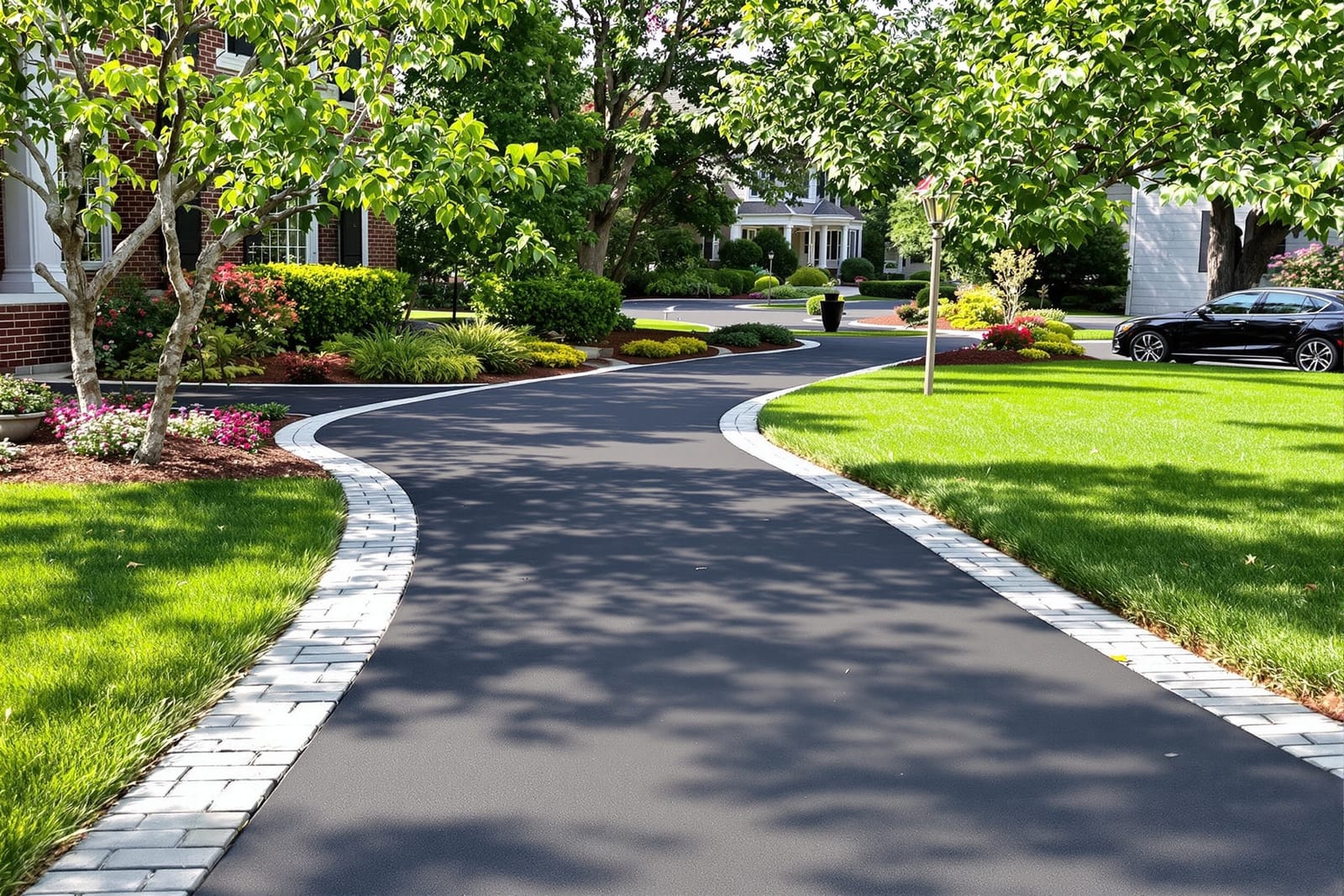
Create safe, smooth access around your property with asphalt walkway paving in Cleveland, OH. We design and install pathways that blend with your landscaping and handle daily foot traffic. From front walks to backyard paths, our asphalt solutions are affordable, durable, and easy to maintain.
Precision Asphalt Cleveland provides professional asphalt walkway paving throughout Cleveland, OH, Ohio and the surrounding area. Our licensed, insured crew delivers safe, clean, on-time work with a free estimate before anything begins. Call (216) 455-8661 or request your free quote.
Asphalt Walkways and Paths Tailored to Cleveland Properties
If you are looking to add or upgrade a walkway, path, or small walking loop on your property, Precision Asphalt Cleveland focuses on asphalt walkway paving that holds up to Northeast Ohio conditions. We build paths that feel solid underfoot, shed water properly, and match the look of your home or commercial site.
Around Cleveland, we see a lot of cracked concrete walks, heaved pavers, and muddy cut‑through footpaths where people naturally walk. Asphalt is often the most practical way to fix those spots. It creates a continuous, smooth surface that is easier to shovel in winter and more forgiving on joints than concrete. It also lets us shape gentle curves and transitions that fit tight urban lots or irregular yards.
We handle all types of walkway and pathway paving, including front entry walks, side yard access paths, connections from driveways to patios or garages, school and park walking loops, apartment complex pedestrian routes, and access paths to dumpsters, loading areas, and sheds. Our crew looks at how people already move through the space, then designs a path that works instead of forcing people into an awkward route.
From the first visit, we talk through how the walkway will be used, who is walking on it, and what you need it to connect. This helps us choose the right width, thickness, and base preparation so you get a path that lasts rather than something that looks good for a season and then settles or cracks.
How Our Walkway and Pathway Paving Process Works
A durable asphalt walkway starts with the ground underneath it. At Precision Asphalt Cleveland, we follow a step by step process so your path does not rut, sink, or hold water.
1. Site evaluation and layout: We walk the area with you, flag the proposed route, and check slopes with a level. In Cleveland neighborhoods, we also pay attention to tree roots, existing drainage patterns, and property lines so the walkway does not cause water problems or encroach on a neighbor.
2. Excavation: For a typical residential walkway, we excavate roughly 6 to 8 inches below the final surface. If there is old concrete or broken asphalt, we remove it and haul it away. Where there are soft or organic soils, such as areas that were once garden beds, we dig a bit deeper to reach firm subgrade.
3. Subgrade preparation: We compact the exposed soil with a plate tamper or roller so it is tight and uniform. If we find pockets that pump or move under the machine, we remove and replace those spots with stone. This step is critical around Cleveland because freeze and thaw cycles will exploit any weak areas and create dips.
4. Base stone installation: We place and compact 4 to 6 inches of crushed limestone or similar base aggregate. For light use walkways we can be on the lower end; for paths that need to handle maintenance vehicles or snowplows we increase the base depth. The base is shaped with a slight crown or cross slope, typically about 2 percent, so water moves off the path.
5. Binder and surface course (for heavier duty paths): On higher traffic or service paths, such as at schools or commercial properties, we may install a binder course of asphalt first, then a finer surface course on top. For most residential walkways, a single lift of 2 to 3 inches of surface asphalt after compaction is sufficient.
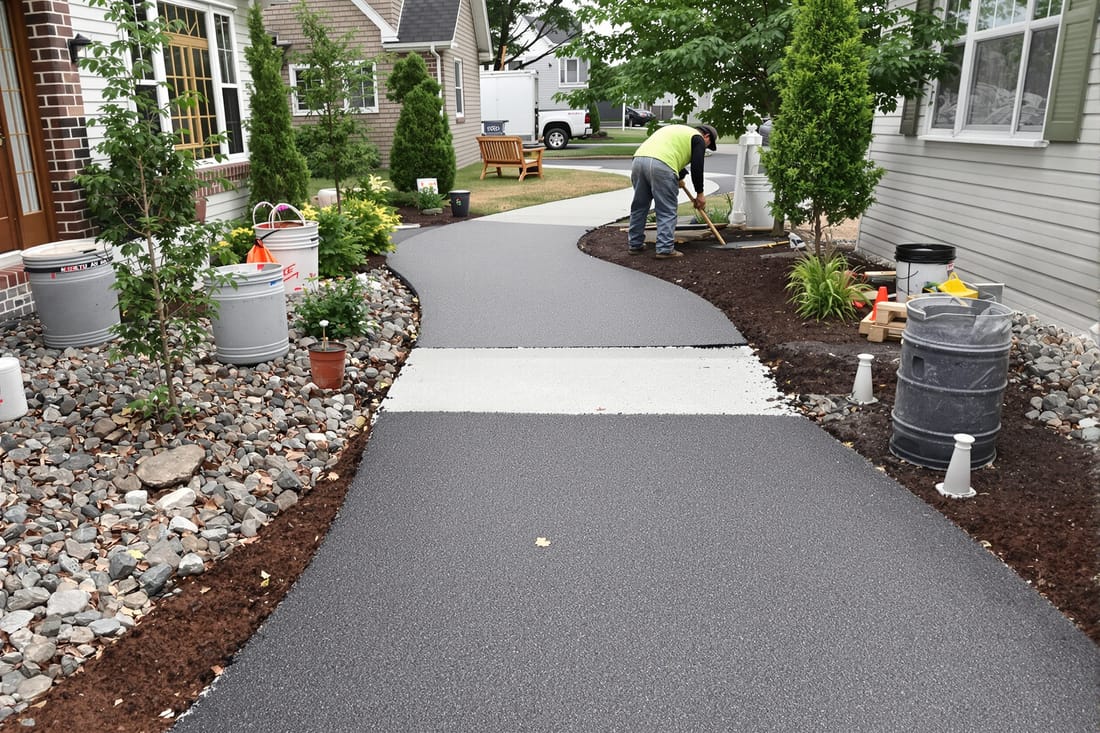
6. Asphalt paving: We use a small paver where access allows, or hand lay and rake asphalt in tighter spaces. It is then compacted with a roller and plate tampers around edges to achieve a dense, even surface.
7. Edges and transitions: Clean edges help the walkway hold its shape. We either compact a slight soil berm against the sides or install a defined edge (for example, along a garden bed) depending on your landscape plan. We also smooth transitions where the path meets existing concrete steps, patios, or driveways so there are no trip lips.
8. Final walk through and cure: Asphalt hardens as it cools, then continues to cure for several days. You can usually walk on it the next day, but we review timing with you based on the weather and thickness installed.
Options to Match Your Property and How They Affect Cost
Every walkway project is a little different, and the choices you make will influence both the look and the price. At Precision Asphalt Cleveland we explain these factors up front so there are no surprises.
Path width and layout: A simple straight side yard walk might only need to be 3 feet wide, while front approaches and shared paths often feel better at 4 to 5 feet. Wider paths use more materials and can require more base stone to stay stable. Curved layouts take more labor to form and compact properly, but they often look more natural and can help route pedestrians around trees, gardens, or utilities.
Base depth and reinforcement: For purely pedestrian use, such as a garden walk, the base can usually be 4 inches of compacted stone. If the path needs to support occasional vehicle traffic, like a lawn tractor, golf cart, or maintenance truck, we recommend 6 or more inches of base and sometimes a thicker asphalt layer. This adds cost but dramatically reduces the chance of ruts and cracking later.
Asphalt mix and thickness: Most residential walkway paving in Cleveland uses a fine surface mix for a smoother finish. Thicker asphalt holds up longer, especially in areas with clay soils that move with moisture. We talk through the tradeoff between up front cost and lifespan so you can decide what fits your plans for the property.
Site conditions: Sloped yards, tight alley access, or heavy tree root zones can affect pricing. Working behind homes in older Cleveland neighborhoods sometimes means we bring in smaller equipment or haul material by skid steer instead of full size trucks, which increases labor time. Removing old concrete, resolving drainage issues, or correcting major grade problems will also add to the project cost, but those fixes are often what separates a short lived patch from a long term solution.
Finishing details: Small changes like flared entries at sidewalks, widened passing spots on longer trails, or edging against mulched beds can make daily use more comfortable. On commercial projects, we help plan crosswalk tie ins, ADA compliant slopes, and landing areas that meet code, which can require more layout and fine grading but avoids future corrections.
Common Cleveland Walkway Problems We Fix and How We Prevent Them
Working across Cleveland and the surrounding suburbs, we see the same walkway issues repeat: sinking slabs along Lakewood side yards, icy spots close to downspouts in Parma, and broken paths around older maple and oak trees in Shaker and Cleveland Heights. Precision Asphalt Cleveland focuses on solving the root causes, not just covering them with a new layer of blacktop.
Poor drainage: Water that stands on a walkway or flows across it will freeze in winter and break down the surface. Before we pave, we look at gutters, downspouts, and natural drainage. Sometimes the fix is as simple as regrading the base so the path sheds water to the lawn. Other times, we may route downspouts away from the path area or incorporate a small swale alongside the walkway. We avoid creating low spots that turn into ice patches in January.
Tree roots and heaving: Big roots close to the surface can push up any hard surface. When we lay out an asphalt walkway, we adjust the route to stay clear of major roots if possible. Where we must cross root zones, we may increase base depth and use a slightly flexible design, understanding that future root growth can still cause movement. We discuss realistic expectations with you before the work starts so there are no surprises.
Thin or no base under existing paths: A lot of older walkways in Cleveland were poured or paved right on top of topsoil. That leads to sinking and cracking. When we replace a failing path, we do not simply pave over what is there. We remove the failed material, build a proper compacted stone base, and then pave so the new surface has real support.
Improper slope: A walkway that pitches toward a house or garage can drive water into foundations or low lying entries. We use levels and string lines to make sure the finished asphalt walkway pitches away from structures. In tight spaces where we cannot change the slope much, we may suggest adding a small channel or correcting adjacent grades to move water safely.
Patchwork repairs: Spot fixing a crumbled concrete section with random materials often leads to trip hazards. If a path is failing in several places, we will usually recommend a full replacement or at least removal and rebuilding of the worst runs so you end up with a continuous, even surface that is easier to maintain and safer to use.
What to Know Before You Hire an Asphalt Walkway Paving Contractor
Choosing the right contractor for your walkway or pathway matters more than many people expect. A path is not as thick as a driveway, so details in the base and compaction make the difference between a solid, long lasting surface and one that breaks up after a couple of winters.
When you talk with Precision Asphalt Cleveland, we encourage you to ask specific questions, and you should ask any contractor the same:
• How deep will you excavate and how much base stone will you install for my particular path use?
• How will you handle drainage, especially in the low spots or around my downspouts?
• What thickness of asphalt will you place after compaction, and what mix will you use for a smooth walking surface?
A careful contractor will walk the site with you, mention any potential issues such as soft soils or tight access, and include those in a written estimate. If a quote only lists a lump sum price without explaining base depth, asphalt thickness, or how transitions to existing concrete will be handled, it is hard to compare it to other proposals.
Timing is also important in Cleveland. Our paving season is limited by weather. Spring and fall jobs can require more attention to temperature for proper compaction and curing. We schedule walkway paving so asphalt is placed on a firm, dry base and has time to cool and harden before heavy use.
Before work starts, you can prepare by marking underground utilities like sprinkler lines or low voltage lighting, trimming vegetation along the route, and deciding on final widths and any curves. We will go over housekeeping items such as how we will access the site, where trucks can park, and how long the area will be out of use.
Our goal is to leave you with an asphalt walkway or pathway that feels natural to walk on, fits your property, and does not need constant patching. With proper installation and simple upkeep like keeping edges trimmed and cracks sealed over time, your new path should serve you well through many Cleveland winters.