Home › Commercial Asphalt Resurfacing & Overlays
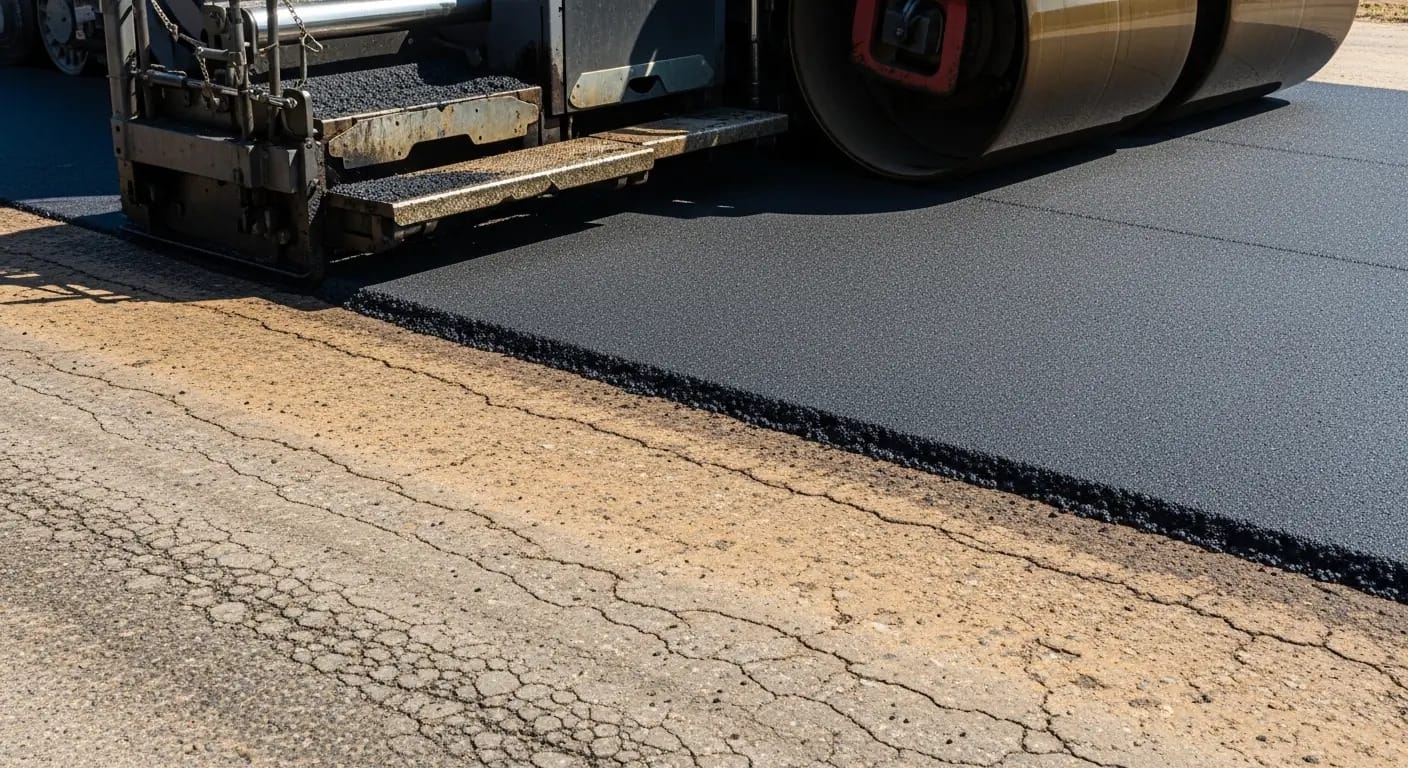
Extend the life of your existing pavement with commercial asphalt resurfacing in Cleveland, OH. We repair distressed areas, then apply a new overlay or perform mill and overlay to restore a smooth driving surface. Ideal for parking lots, private roads, and commercial drives that need a fresh top layer.
Precision Asphalt Cleveland provides professional commercial asphalt resurfacing throughout Cleveland, OH, Ohio and the surrounding area. Our licensed, insured crew delivers safe, clean, on-time work with a free estimate before anything begins. Call (216) 455-8661 or request your free quote.
Commercial Asphalt Resurfacing & Overlays in Cleveland, OH
Commercial asphalt resurfacing is the process of restoring a worn parking lot or drive lane by installing a new layer of asphalt over the existing pavement. For many commercial properties in Cleveland, this is a better choice than full removal and replacement, as long as the base is still structurally sound. Precision Asphalt Cleveland focuses on resurfacing and overlays for shopping centers, warehouses, office parks, industrial yards, and multi-family complexes.
In Northeast Ohio, pavements take a beating from freeze-thaw cycles, snowplows, deicing salts, and heavy delivery traffic. Resurfacing targets the top layer where most of the damage occurs, while preserving what still works underneath. The result is a smoother, safer surface with a new life cycle, at a lower cost and shorter downtime than a full-depth rebuild.
When you call Precision Asphalt Cleveland, we do not just quote a square-foot price over the phone. We walk your site, probe weak spots, look for drainage problems, and evaluate the existing base. Only then do we recommend resurfacing, spot reconstruction, or full replacement, based on what will hold up under your real-world traffic and Cleveland weather.
How Commercial Asphalt Resurfacing & Overlays Are Actually Done
A proper commercial asphalt overlay is more than simply putting new blacktop down. Precision Asphalt Cleveland follows a sequence that is tailored to commercial use and local conditions.
First, we inspect and document existing failures: alligator cracking, potholes, rutting in drive lanes, raveling, and drainage issues. Any area with structural failure is cut out with a saw or milled deeper, then rebuilt with new base aggregate and base asphalt. This step is critical, or those failures will telegraph back through the new surface within a couple of winters.
Second, we address drainage. In Cleveland, clogged or poorly located catch basins and low spots create standing water that speeds up cracking when it freezes. We may regrade around drains, adjust castings, or recommend installing or moving inlets before resurfacing. Correct drainage is the difference between a resurfacing that lasts 4 years and one that lasts 12 or more.
Third, we mill or grind existing asphalt where needed. At tie-in points to city streets, concrete aprons, or building entrances, we use a milling machine to remove a controlled depth so the new overlay sits flush with surrounding surfaces. On some projects, we may perform a full surface mill at 1 to 2 inches to remove oxidized material while keeping the base intact.
Fourth, we clean and tack coat. The surface is power swept to remove dust and debris, then we apply a tack coat (a sprayed asphalt emulsion) so the new layer bonds tightly to the old pavement. Skipping or thinning the tack coat is a shortcut we avoid because it leads to slippage and early delamination.
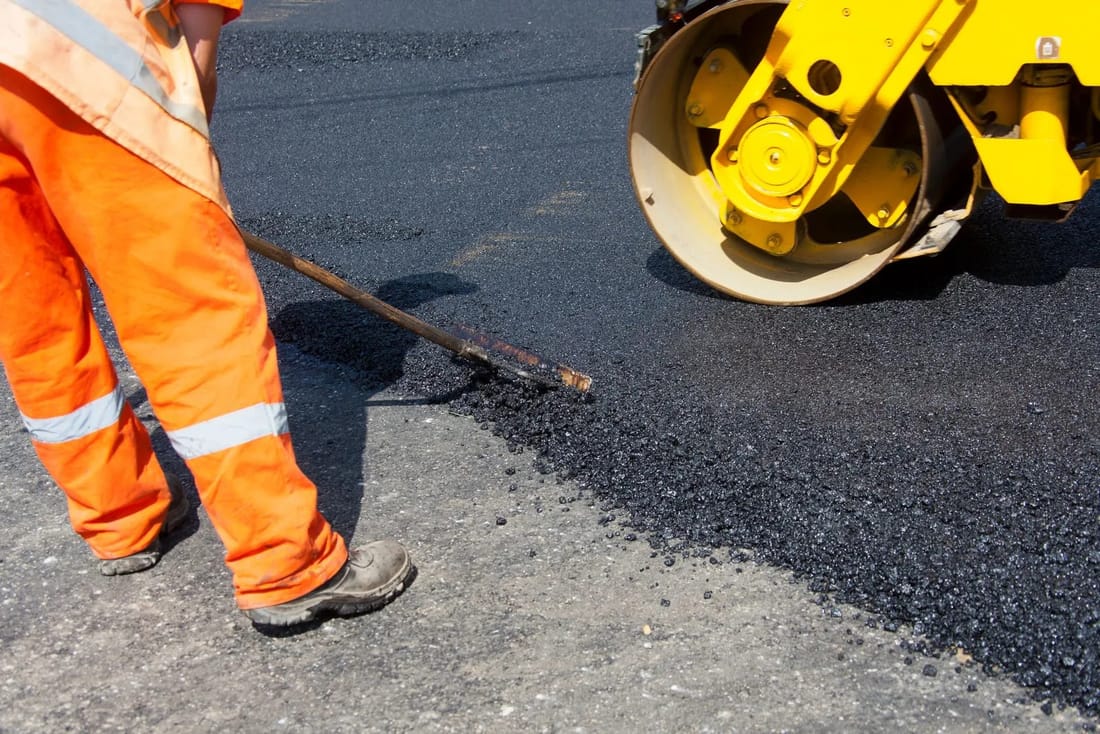
Finally, we place and compact the new asphalt layer using commercial paving equipment. For overlays, we typically install 1.5 to 2 inches of hot mix asphalt for parking areas, sometimes thicker in main drive lanes that see truck traffic. We use steel drum and pneumatic rollers to achieve proper compaction, and we check joints and transitions to keep them smooth for pedestrians, carts, and vehicles.
Material Options and Design Choices for Overlays
Not all commercial asphalt resurfacing uses the same mix or thickness. Precision Asphalt Cleveland selects materials and design details based on how your pavement is actually used.
For light-duty parking stalls and low-traffic office lots, a 1.5-inch surface course over a sound base is often sufficient. In retail centers with frequent delivery trucks or in industrial yards, we may recommend 2 to 3 inches of overlay or a two-layer approach with a stronger base course and a finer surface course. Heavier sections cost more up front but significantly extend life where trucks turn, stop, and load.
Mix design also matters. In Cleveland, we often use a dense-graded hot mix that resists moisture and rutting. In high-visibility areas near storefronts and entrances, we can specify finer aggregate for a smoother finish and cleaner striping. In loading zones and dumpster pads where static loads are high, we may propose partial concrete replacement instead of asphalt overlay to prevent future deformation.
We also review joint locations and traffic patterns. On properties with frequent snowplow activity, we avoid creating abrupt joints and raised areas that plow blades will catch. On steep driveway entrances, we may incorporate texturing or a specific mix to reduce slickness in winter conditions.
If your property has existing overlays, we evaluate total pavement height relative to curbs, door thresholds, and ADA routes. Stacking more overlays every few years can trap water and create trip hazards. In those cases, we may suggest milling to a set depth before overlaying so the final elevation remains consistent with curbs, drains, and access ramps.
Common Problems With Resurfacing and How We Prevent Them
Many resurfacing jobs fail early not because asphalt is a bad choice, but because key steps were skipped. Precision Asphalt Cleveland focuses on the issues that typically shorten the life of an overlay in our region and addresses them head on.
Reflective cracking is one of the biggest concerns. If the lower layer has wide structural cracks and those areas are not repaired or reinforced, they will eventually crack through the new overlay line for line. We identify and remove or stabilize these areas by patching, undercutting soft spots, and sometimes adding localized fabric or grid reinforcement where justified.
Drainage and edge failures are another common problem. If water runs across the lot but has nowhere to go, or if the overlay is built higher than adjoining concrete, water will sit at pavement edges and seep down into the base. We look at how snow and rain actually move on your site, then use milling, minor grading, or basin adjustments to avoid standing water. Along open edges, we may recommend edge strengthening or widening so vehicles are not constantly breaking off the overlay at the side.
Seam and joint quality matters on busy commercial lots where traffic runs the same wheel paths all day. Poorly compacted joints tend to ravel and open early. Our crews pay particular attention to longitudinal joints between passes, using proper overlap, heat management, and rolling patterns to minimize future separation.
Finally, improper timing and curing practices can lead to scuffing and deformation. On hot summer days in Cleveland, opening a freshly overlaid lot to heavy truck traffic too soon can leave ruts or power steering marks. We schedule work in phases and clearly communicate when different sections can safely reopen for cars, box trucks, and semis, so your operation can keep running without sacrificing pavement quality.
Costs, Scheduling, and What Drives Your Price
Commercial asphalt resurfacing costs are driven by more than just square footage. Precision Asphalt Cleveland explains these factors up front so you can budget accurately and compare bids fairly.
Existing condition is the first driver. Lots with extensive base failures, deep potholes, or severe rutting will need more patching and possible undercutting before an overlay can be installed. That extra base work adds cost but is usually a fraction of full replacement and critical to long-term performance.
Thickness of the overlay is the second driver. A 1.5-inch overlay uses significantly less material than a 2.5 or 3-inch overlay. On heavy truck routes, we often show clients two or three options with different thicknesses and expected lifespans so they can make a dollars-per-year decision instead of only looking at immediate price.
Access and phasing also affect cost. In Cleveland, many commercial properties operate 7 days a week. Working at night, in tight courtyards, or in small phases so tenants and customers can still park will increase labor and mobilization costs. We work with you to decide whether extended hours, weekend work, or temporary closures make the most sense financially and operationally.
Other cost factors include milling depth, the number of basins that need adjustment, required traffic control, and whether you bundle services like striping and concrete repair. Our proposals separate these line items so you can see exactly what you are paying for and what can be adjusted to align with your budget.
On scheduling, surfacing work in Cleveland is strongly seasonal. Prime paving months are typically April through early November, depending on temperatures. If you have a specific completion date, it is smart to get on the schedule well before peak season, especially for large shopping centers, industrial parks, or multi-building campuses.
Why Work With Precision Asphalt Cleveland for Your Overlay Project
Commercial resurfacing projects in Cleveland benefit from a contractor that understands both paving and local conditions. Precision Asphalt Cleveland has years of experience with the specific challenges of Lake Erie weather, winter maintenance, and regional soil conditions.
We are local, so we know how city and county streets tie into your entrances, how much salt the plows use, and how thaw cycles affect different parts of town. This informs our recommendations on overlay thickness, drainage corrections, and when resurfacing is still a smart option versus when it is time for full-depth reconstruction.
Our focus is on practical outcomes. We design resurfacing projects around your operating hours, tenant requirements, and safety concerns. For example, office parks may prefer evening or weekend phases, while industrial sites may want single-day closures of specific drive lanes to minimize disruption to truck traffic. We plan traffic control, temporary signage, and pedestrian routing as part of the project, not as an afterthought.
Quality control on overlays matters as much as on new construction. We monitor temperatures, compaction, joint quality, and smoothness throughout the job. After paving, we coordinate striping, ADA markings, and signage so you are not trying to track down multiple vendors. You get a single point of accountability from initial condition assessment through final walkthrough.
If you are considering commercial asphalt resurfacing for a property in Cleveland or the surrounding suburbs, Precision Asphalt Cleveland can evaluate whether an overlay will truly extend the life of your pavement or if your money is better spent on targeted reconstruction. Our goal is to give you a surface that holds up for years under real traffic and real weather, not just to make it look good for the first season.