Home › Industrial and Heavy-Duty Asphalt Paving
Handle heavy traffic and loads with industrial asphalt paving in Cleveland, OH. We design and build thick section pavements for truck yards, loading docks, and warehouse areas that resist rutting and breakdown. Get a durable surface that supports your operations with minimal downtime.
Precision Asphalt Cleveland provides professional industrial asphalt paving throughout Cleveland, OH, Ohio and the surrounding area. Our licensed, insured crew delivers safe, clean, on-time work with a free estimate before anything begins. Call (216) 455-8661 or request your free quote.
Industrial Asphalt Paving Built For Cleveland’s Toughest Sites
Industrial and heavy-duty asphalt paving is very different from paving a driveway or small parking lot. At Precision Asphalt Cleveland, we design pavements that can survive constant truck traffic, steel tracked equipment, forklifts, and chemical exposure on Cleveland and Northeast Ohio industrial sites.
When we look at an industrial asphalt paving project, we start with how your site is actually used: axle loads, turning patterns, where trucks queue, where trailers are parked long term, and what types of fluids may hit the surface. A distribution center with constant semi traffic, a manufacturing plant with loaded forklifts, and a scrap yard with loaders all need different pavement designs. We build that use pattern into the structure of the pavement so it performs for years instead of failing in a few winters.
Our team focuses specifically on heavy-duty applications around Cleveland, including plants near the lakefront, trucking depots close to I-90 and I-480, utility yards, and high-volume loading docks. That local focus matters, because freeze-thaw cycles, salt use, and subgrade soils in Cuyahoga County must be handled correctly or even a thick asphalt section will fail early.
Site Evaluation, Core Sampling, and Pavement Design
Every industrial asphalt paving project with Precision Asphalt Cleveland starts with a detailed site evaluation. We walk the area with you, review traffic flow and loading conditions, and document drainage problems, soft spots, and existing failures like rutting, pumping, and alligator cracking.
For heavy-duty work, we strongly recommend core sampling or test pits on existing pavement. We cut cores to see actual asphalt thickness, base material type, and moisture conditions, then use that data to determine if full-depth reconstruction or deep patching is needed. On new construction, we test the subgrade with proof rolling or dynamic compaction checks to be sure it can support the designed loads.
Based on the site data, we engineer a pavement section that usually includes a compacted subgrade, crushed aggregate base, and multiple asphalt lifts. For example, a typical heavy truck lane might use 8 to 12 inches of aggregate base with 5 to 7 inches of industrial-grade asphalt in two or three layers, while a light-use area on the same property could be built with a more economical section. We explain the tradeoffs so you can balance budget and performance instead of guessing at thickness.
Materials and Mixes Built for Heavy Loads
Industrial asphalt paving lives or dies based on the mix selection. In the Cleveland climate, standard parking lot mixes often rut or ravel under heavy wheel loads. Precision Asphalt Cleveland works with local plants to specify mixes that match your loading and temperature conditions.
Heavy-duty areas such as loading docks, dumpster pads, and truck aprons typically get a higher-stability surface mix with a tighter aggregate gradation and a performance-graded binder that resists rutting. We may also recommend a thicker base course with a larger aggregate mix under those zones to spread loads and reduce deflection.
Where forklifts pivot in tight circles, like at warehouse entries, we often adjust the mix design and sometimes the texture to reduce surface shoving. In chemical exposure areas, for example where oils, coolants, or fuels are likely to drip, we evaluate whether localized concrete pads or special surface treatments should be integrated into the paved layout.
We also factor in winter plowing. Mix and compaction targets are selected so the surface holds up under steel blades and frequent salt applications that are common on Cleveland industrial sites from November through March.
Construction Process for Industrial and Heavy-Duty Asphalt Paving
Our construction sequence is structured around long-term performance, not just getting black on the ground. Once the design is set, Precision Asphalt Cleveland mobilizes with crews and equipment sized for industrial-scale work so downtime at your facility is minimized.
We begin with stripping and demolition, removing old asphalt and any failed base material. Soft subgrade areas are undercut and replaced with suitable fill. We then shape the subgrade to the designed slopes and compact it to a specified density that we verify with field tests.
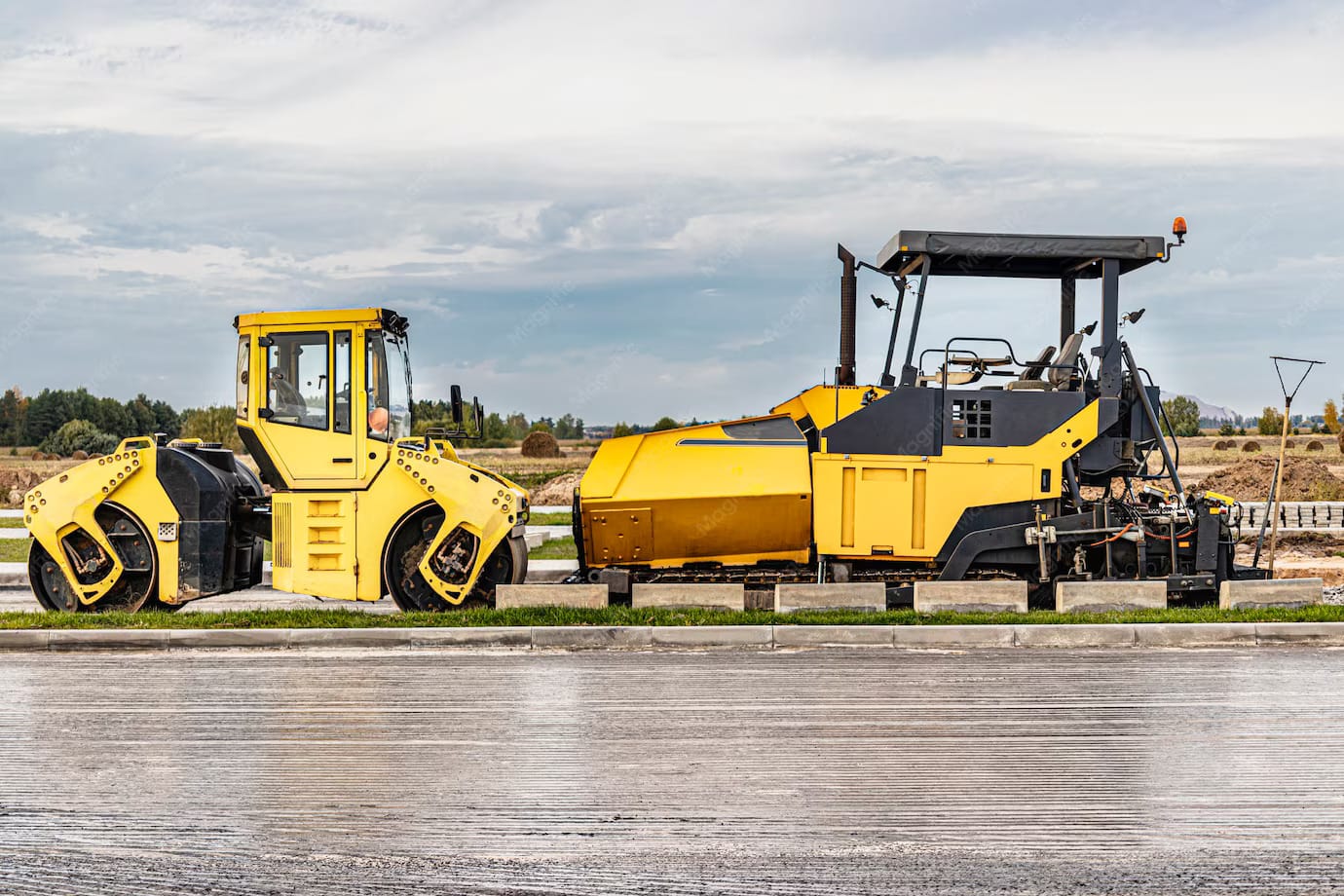
Crushed aggregate base is installed in lifts, each compacted with vibratory rollers. In high-load areas like main truck paths and trailer storage zones, we may use additional passes or heavier rollers to achieve tighter densities. Poor compaction at this stage is a common cause of rutting, so we treat it as a quality control checkpoint, not a formality.
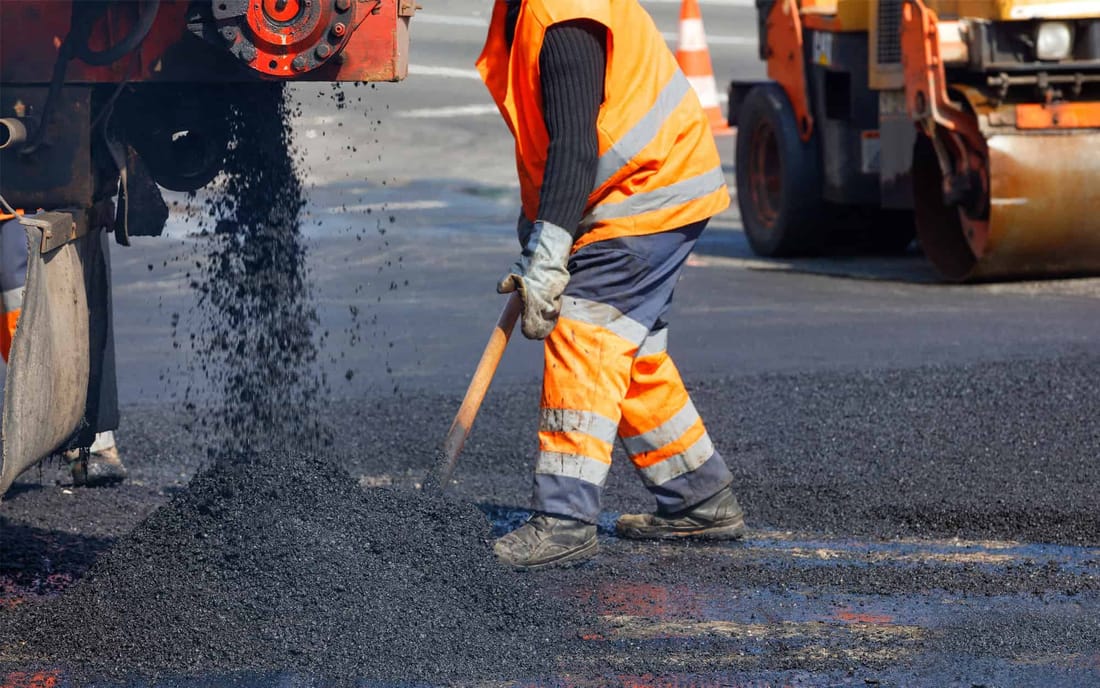
Asphalt is laid in multiple lifts with pavers sized to match the width of your lanes or dock areas, which reduces joints. Each lift is rolled promptly to achieve target density and smoothness. For heavy-duty projects, we pay particular attention to transitions at dock doors, utility trench patches, and tie-ins to existing pavement or concrete, since weak spots at these interfaces often cause early failures.
Throughout construction we coordinate with your operations team to phase work around shift changes, inbound deliveries, and safety requirements so your facility remains functional and compliant while we rebuild critical pavement areas.
Cost Drivers and How to Control Your Budget
Industrial asphalt paving has more variables than standard commercial work, so understanding cost drivers helps you plan accurately. Precision Asphalt Cleveland is transparent about the factors that move pricing up or down on heavy-duty projects around Cleveland.
Key cost components include pavement thickness, base depth and quality, subgrade corrections, access constraints, and staging complexity. A 6-inch asphalt section over 8 inches of base will cost more upfront than a thinner build, but for 24/7 trucking operations the added structural capacity usually pays for itself in reduced emergency repairs and downtime.
Subgrade problems are often the largest wild card. Sites built on fill near the river or older industrial land with buried debris frequently require undercutting or stabilization. To avoid surprises, we recommend allowing budget for a defined quantity of undercut and base repair, then adjusting once we see actual conditions in the field.
You can control costs by prioritizing reinforcement only where it is truly needed, for example thicker sections in drive lanes and dock approaches, with lighter sections in employee parking or overflow areas. We often phase large projects over multiple seasons so you can spread costs while keeping critical operations running on solid pavement.
Common Industrial Pavement Problems in Cleveland and How We Address Them
Local conditions around Cleveland and Northeast Ohio create recurring problems on industrial asphalt that we design and build specifically to avoid.
Rutting in truck lanes and at stop points is common where mixes are too soft or base support is inadequate. We counter this with high-stability mix designs, proper base thickness, and attention to compaction. For existing facilities, we may mill out rutted wheel paths only, install a stronger base or leveling course, then overlay to restore grade without reconstructing the entire lot.
Pumping and mud popping through cracks indicate subgrade saturation or trapped water. On sites with poor drainage, such as low-lying yards or older plants near the lake, we incorporate underdrains, improved surface grading, and sometimes edge drains to keep the pavement structure dry. Without these details, even a thick pavement will break up within a few freeze-thaw cycles.
Joint failures and localized heaving often appear where asphalt meets concrete loading docks or trench repairs. We manage these transitions with properly shaped joints, sawcut edges, adequate base preparation, and sealants where appropriate. For industrial clients that see frequent utility trench work, we can establish trench restoration standards to prevent a patchwork of weak spots from forming across your pavement over time.
Reflective cracking on overlays is another frequent issue in older industrial facilities. When we overlay, we evaluate whether full-depth repairs, interlayers, or localized reconstruction are needed before new asphalt goes down so you do not see the old crack pattern mirrored through in just a season or two.
Planning, Phasing, and Long-Term Maintenance
The most successful industrial asphalt paving projects are planned with operations and maintenance in mind from the start. Precision Asphalt Cleveland works with plant managers, facility engineers, and logistics coordinators across Cleveland to sequence work around production and shipping schedules.
For high-traffic sites, we often pave in zones so a portion of docks or drive lanes remain open. Weekend or off-shift work can be scheduled for tie-ins at main entrances or critical intersections. We communicate curing and traffic timing clearly so loaded trucks are not placed on fresh asphalt too soon.
Once the pavement is in service, a straightforward maintenance plan greatly extends its life. For heavy-duty pavements, this usually includes scheduled crack sealing, monitoring of high-stress locations like dock approaches, and targeted patching before small defects become structural issues. Sealcoating is not always appropriate for high-load lanes, especially where forklifts operate, so we will tell you where it makes sense and where it does not.
We also encourage periodic pavement evaluations every few years. On industrial sites, early signs of distress in a particular zone often reveal changing traffic patterns, load increases, or drainage shifts. Addressing those changes with localized reinforcement or drainage improvements is far more cost-effective than reacting after widespread failure occurs.