Home › Parking Lot Sealcoating & Maintenance
Protect your investment and keep your property looking sharp with parking lot sealcoating in Cleveland, OH. We provide thorough cleaning, crack sealing, and uniform sealcoat application to shield your asphalt from traffic, oil, and weather. Scheduled maintenance helps you avoid major repairs and extend pavement life.
Precision Asphalt Cleveland provides professional parking lot sealcoating throughout Cleveland, OH, Ohio and the surrounding area. Our licensed, insured crew delivers safe, clean, on-time work with a free estimate before anything begins. Call (216) 455-8661 or request your free quote.
Parking Lot Sealcoating in Cleveland, OH That Actually Holds Up
If you manage a commercial property in Cleveland, you already know what our winters, road salt, and freeze–thaw cycles do to asphalt. Parking lot sealcoating is not just a cosmetic touch up. Done right, it is a protective layer that slows down cracking, raveling, and potholes, which keeps your lot safer and saves you from bigger repair bills.
At Precision Asphalt Cleveland, we focus on getting the prep and timing right for Cleveland’s climate. We typically recommend sealcoating every 2 to 4 years for most commercial parking lots, depending on traffic and how aggressively de-icing salts are used. Lots that see heavy truck traffic, frequent snow plowing, or consistent turning movements at entrances and drive lanes may need it closer to every 2 years.
We primarily use coal tar or asphalt emulsion sealer that is specifically rated for our region. Coal tar stands up better to gasoline and oil drips, which is important in parking lots, and asphalt emulsion has lower odor and fewer environmental concerns. We can walk you through the pros and cons for your property type and help you pick the right product instead of pushing a one size fits all option.
Our Step by Step Sealcoating & Maintenance Process
Good sealcoating starts long before the sealer hits the pavement. Here is how Precision Asphalt Cleveland typically handles a parking lot sealcoating project in the greater Cleveland area.
1) Site walk and plan. We walk the lot with you to identify high traffic areas, drainage patterns, oil soaked spots, alligator cracking, and any trip hazards. From that, we create a phasing plan that keeps parts of your lot open so tenants, employees, and customers can still access the building.
2) Thorough cleaning. We power sweep the entire lot to remove sand, salt residue, and loose aggregate, then use high pressure air or mechanical blowers to clean joints and cracks. Oil saturated spots are treated with an oil spot primer so the sealer can bond instead of peeling later.
3) Crack filling and minor repairs. Active cracks are cleaned out and filled with a hot pour rubberized crack sealant. Wider cracks and small potholes may be patched with hot mix asphalt or a high quality cold patch, depending on temperature and access. This step is critical in Cleveland, since water in untreated cracks will expand when it freezes and break the pavement faster.
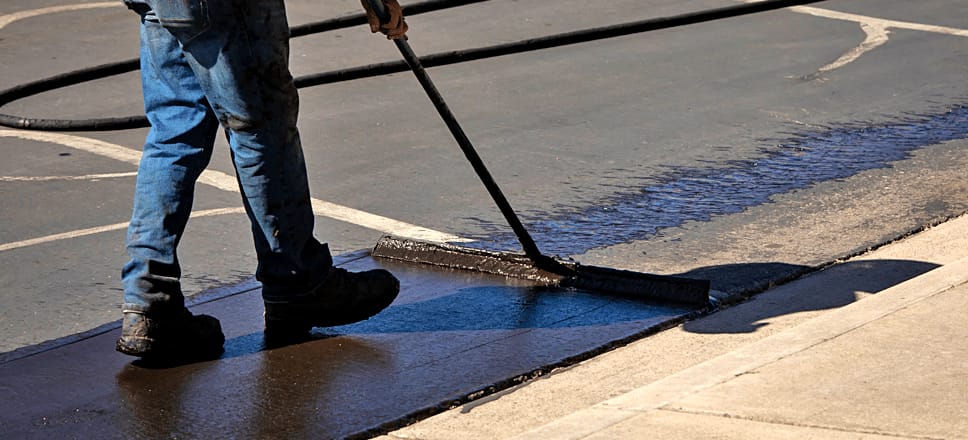
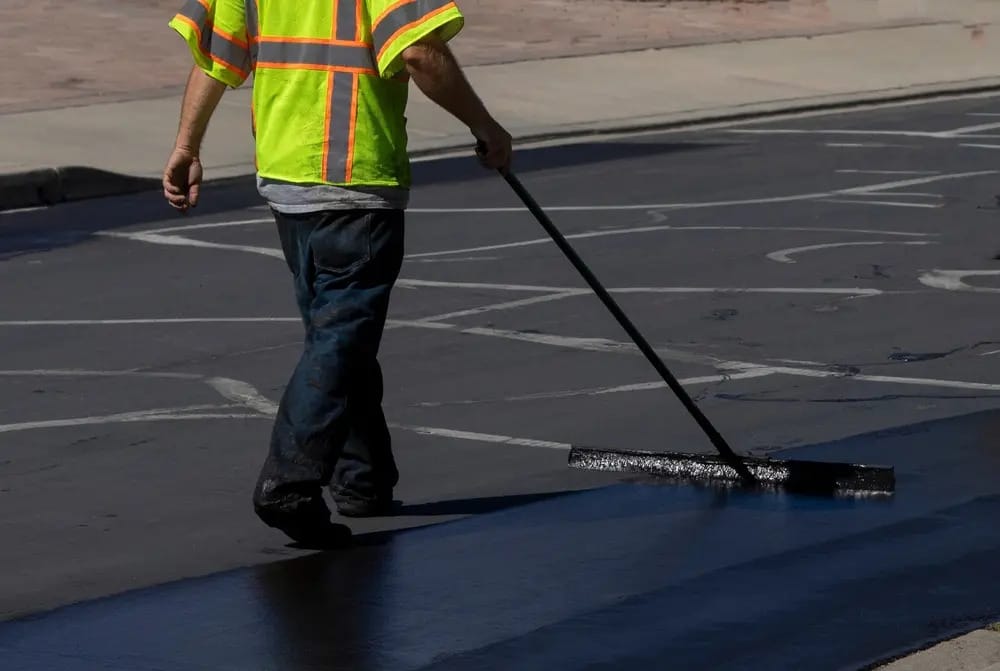
4) Application of sealer. We usually install two coats of commercial grade sealer. On tighter areas around curbs, buildings, and landscaping, we use a brush or squeegee for control. On open parking bays and drive lanes, we use a calibrated spray system for consistent coverage. The mix is blended to manufacturer specs, typically with added sand and latex additives to improve traction and durability.
5) Line striping and pavement markings. Once the sealer has cured, we re-stripe stalls, ADA accessible spaces, fire lanes, arrows, crosswalks, and any custom stenciling like reserved or visitor spots. We use fast drying traffic paint so your lot can reopen quickly while still meeting local code and ADA layout requirements.
6) Final walk through. We check for thin spots, missed cracks, overspray on curbs, and confirm that all markings are clean and visible. We also review cure time and reopening instructions with you so you are not guessing when to let vehicles back onto the surface.
What Affects Cost and Timing for Parking Lot Sealcoating
Property owners in Cleveland often ask why two lots that look similar can have very different sealcoating quotes. At Precision Asphalt Cleveland, we break the cost down into real factors so you know what you are paying for.
Lot size and layout. Large, open areas are more efficient to sealcoat, since spray equipment can move quickly. Lots with many islands, tight drive lanes, and lots of stop and start areas require more hand work and edge detailing, which increases labor time.
Existing condition. A relatively smooth, lightly oxidized lot needs less crack filling and fewer patch repairs. If your lot has extensive alligator cracking, standing water issues, or large potholes, we may recommend structural repairs or partial resurfacing before sealcoating. In that case, sealcoating becomes the finish step instead of the entire project.
Traffic and usage. Lots that handle semi trucks, heavy delivery vehicles, or high daily turnover will need more frequent maintenance and sometimes a slightly heavier sand load in the sealer to improve wear resistance. We will ask about your busiest days and hours so we can phase work and choose materials that cure fast enough for your schedule.
Season and weather. In Northeast Ohio, the best window for sealcoating is typically late April through early October, when daytime highs are consistently above about 55 degrees and overnight temperatures stay warm enough for proper curing. High humidity, rain, and cold nights slow down cure times. We watch the forecast closely and will sometimes adjust start times or split coats over multiple days if lake effect weather looks questionable.
Access and traffic control. If your property requires flaggers, temporary signage, or off hours and overnight work to keep businesses open, that planning and extra staffing affects pricing. We will give you options, like a two phase or three phase schedule, so you can balance budget with convenience for your tenants or customers.
Common Cleveland Parking Lot Problems and How We Fix Them
Cleveland’s combination of snow, road salt, and temperature swings creates a distinctive set of parking lot problems. When Precision Asphalt Cleveland evaluates your lot for sealcoating, we focus as much on these underlying issues as on the appearance.
Salt and chemical damage. De-icing salts and calcium chloride accelerate surface wear and create fine cracking and raveling. Before we sealcoat, we mechanically clean and sometimes pressure wash areas with heavy salt buildup so the sealer bonds to asphalt, not to residue. In some cases we recommend a more frequent maintenance cycle near entrances where salt is most concentrated.
Standing water and drainage issues. Low spots in a lot hold water, which then seeps into cracks and expands during freezes. We check for birdbaths and flow patterns during our site walk. Shallow depressions can often be leveled with patching before sealcoating. More serious drainage problems might need milling and repaving in targeted areas, or adding swales or inlets, before a sealcoat will perform well.
Alligator cracking and base failures. Fine, interconnected cracks that resemble alligator skin usually indicate that the base below the asphalt has failed or is stressed. Simply sealcoating over that will not solve the problem. For those areas, we typically saw cut, remove the damaged pavement, repair the base if needed, then install new asphalt before any seal coat is applied.
Oil spots in customer or employee parking. Long term parking areas often have deep oil staining where vehicles sit. If these spots are not properly treated, the sealer will peel within months. We use oil primers and, when needed, remove and replace the top layer of asphalt in the worst areas so you get an even, long lasting finish instead of blotchy patches.
Traffic pattern issues. Over time, tight turning movements at entrances, drive throughs, or dumpster pads cause scuffing and early wear. When we restripe after sealcoating, we can sometimes adjust stall angles, entrance widths, or traffic arrows to reduce that stress and extend the life of the surface.
Planning, Scheduling, and Working Around Your Business
Sealcoating does disrupt normal parking, but with planning it does not have to disrupt your business. Precision Asphalt Cleveland coordinates closely with property managers, HOAs, facility teams, and small business owners to make the process smooth.
Phased work areas. Instead of closing the whole lot at once, we usually divide it into sections. We might complete the back half of the lot one day and the front half the next, or separate tenant areas if you share a center. Clear phasing helps you communicate with tenants and customers and keeps emergency access open.
Communication and signage. We provide sample notices you can send to tenants or post in common areas, with specific dates, times, and parking instructions. On site, we use cones, caution tape, and clear signage so drivers know exactly where they can and cannot go. This helps prevent fresh sealer from being tracked and protects vehicles.
Cure times and reopening. In typical Cleveland summer weather, we often recommend keeping vehicles off a newly sealed surface for 24 hours, sometimes longer in shaded or cooler areas. Foot traffic can usually return sooner. We will give you area by area instructions and, if needed, schedule work around your busiest days so the lot is fully open when you need it most.
Ongoing maintenance plan. After your project, we can outline a simple 3 to 5 year maintenance plan that includes regular crack filling, spot patching, and future sealcoating cycles. This helps you budget in advance and avoids surprises when small issues turn into large capital expenses.
Whether you manage a small office lot in Parma, a retail center along I 480, or an industrial site in the Cleveland area, our goal is to make your parking lot safer, cleaner looking, and easier to maintain, while being upfront about what your pavement really needs.