Home › Road, Street, and Municipal Paving
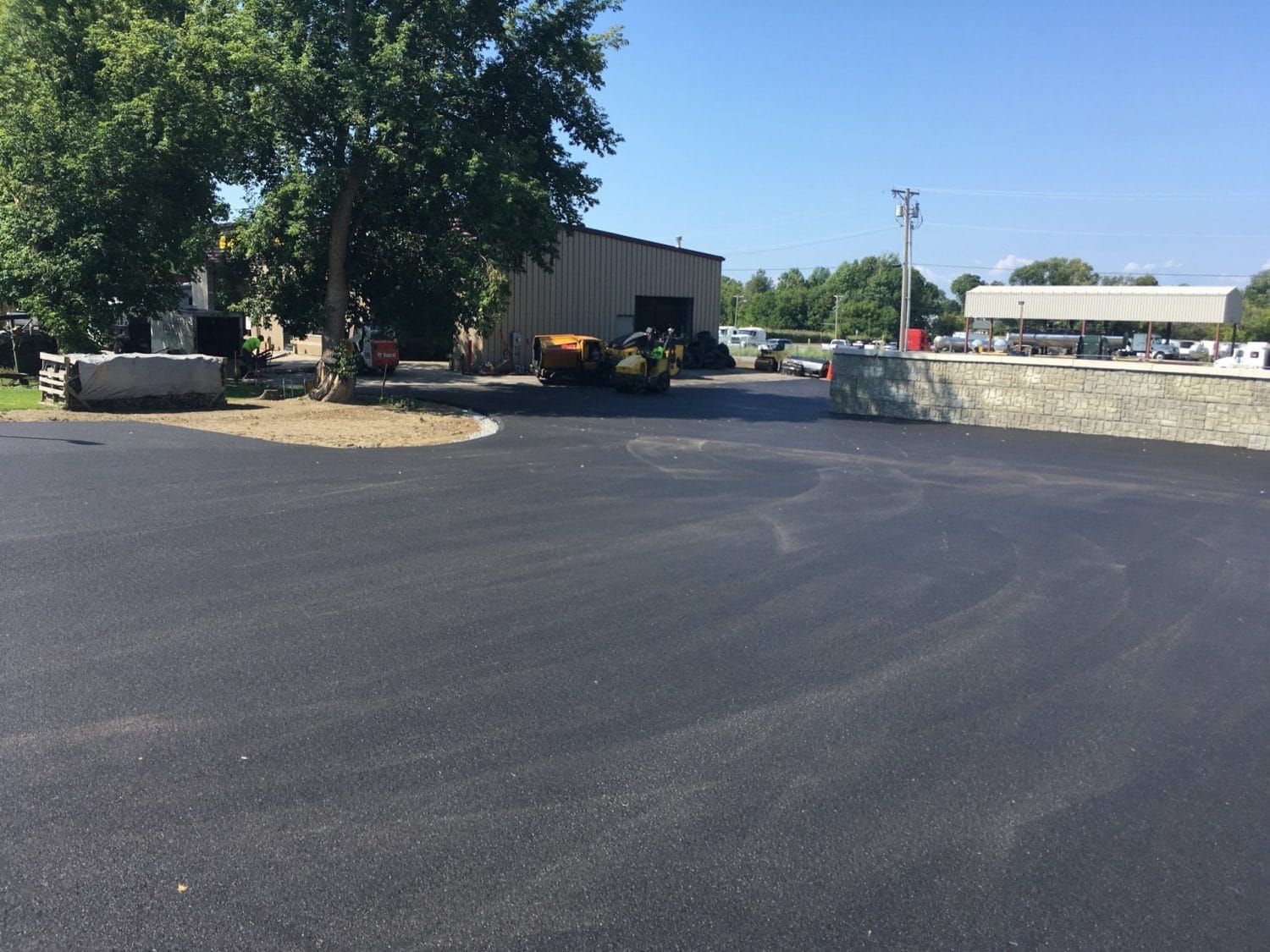
Keep traffic moving smoothly with dependable road paving in Cleveland, OH. We work with municipalities, HOAs, and developers to build and resurface streets, subdivision roads, and access routes. Our crews focus on proper base construction, drainage, and smooth asphalt finishes that stand up to heavy use.
Precision Asphalt Cleveland provides professional road paving throughout Cleveland, OH, Ohio and the surrounding area. Our licensed, insured crew delivers safe, clean, on-time work with a free estimate before anything begins. Call (216) 455-8661 or request your free quote.
Road and Municipal Paving in Cleveland, Built for Local Conditions
Public roads in Cleveland take a beating from lake-effect snow, freeze-thaw cycles, and heavy plow traffic. At Precision Asphalt Cleveland, our road paving work is designed around those exact conditions so your streets and municipal surfaces last longer between major repairs.
We handle a full range of public and private road paving projects across the Cleveland area, including neighborhood streets, municipal parking lots, service roads, access lanes, and subdivision roadways. Whether you represent a city department, township, HOA, facility manager, or industrial property, we tailor each project to traffic levels, safety needs, and your long-term maintenance budget.
Instead of offering a one-size-fits-all “asphalt overlay,” we evaluate existing base strength, drainage patterns, and where the pavement has failed in the past. On older Cleveland streets that have seen dozens of winters, this often uncovers issues such as inadequate base stone, poor subgrade compaction, or drainage that pushes water under the asphalt. We design your paving plan around fixing those issues first, then install new pavement on a solid foundation.
Our team coordinates with your schedule and the realities of city life. That includes staged paving to keep access open for residents or businesses, working around school hours or events, and aligning with utility work whenever possible so you do not pave today and see a trench cut through it next season.
How Professional Road Paving Actually Works
A durable road surface comes from the process under the blacktop, not just the visible finish. For most road and municipal paving in Cleveland, Precision Asphalt Cleveland follows a structured workflow:
1) Evaluation and coring: On larger projects we often recommend pavement cores. These small samples show the existing asphalt thickness, base stone depth, and signs of moisture or contamination, which helps determine whether milling and overlay is enough or full-depth reconstruction is needed.
2) Milling and removal: For streets that still have a sound base, we mill off a controlled depth of existing asphalt, typically 1.5 to 3 inches depending on distress and curb heights. We use cold planers with automatic grade controls so the new surface ties smoothly into intersections, driveways, and manholes.
3) Base repair or reconstruction: Where the road has alligator cracking, rutting, or chronic potholes, we cut out those sections and excavate to stable soil. Then we rebuild with compacted aggregate base, often 6 to 12 inches thick, compacted in lifts with vibratory rollers. If we find soft clay or organic soils, we may recommend geotextile fabric or underdrains to keep the new pavement from sinking or pumping water.
4) Binder course: On higher traffic streets we install a binder course, a coarser asphalt layer that provides structural strength. This is compacted with steel and pneumatic rollers to achieve target density, which directly affects how long the road will last before rutting or cracking.
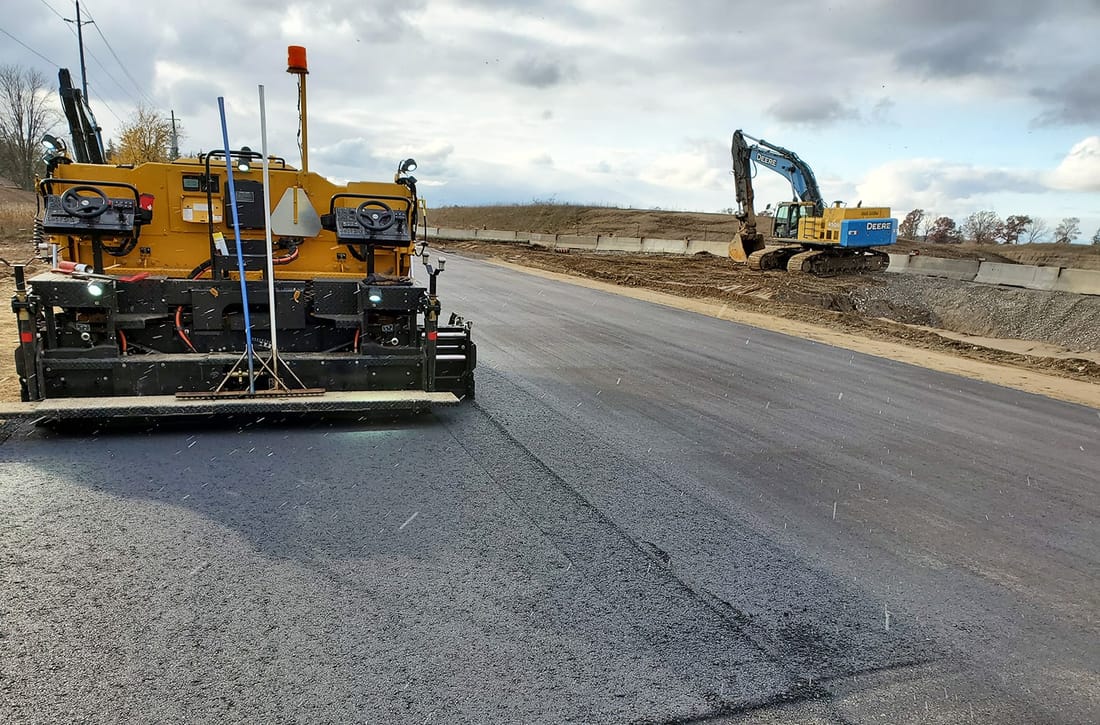
5) Surface course: The final lift uses a finer aggregate mix for a smoother ride and better appearance. In Cleveland, we often specify mixes designed for freeze-thaw durability and snowplow resistance. We pave with a self-propelled paver with automatic screed controls to maintain consistent slope for drainage.
6) Joints, tie-ins, and compaction: The seams where new pavement meets old, and where one paving pass meets the next, are common failure points. We pay special attention to joint construction, tack coating vertical faces, and compacting immediately behind the paver so the asphalt knits together and sheds water instead of letting it seep in.
Material and Design Options for Road, Street, and Municipal Paving
Different Cleveland roads need different asphalt structures. Precision Asphalt Cleveland works with you to select the right combination of thickness, mix, and base based on expected traffic and your maintenance plan.
For low-volume residential streets and HOA roads, we may design a slightly thinner section with a strong base and quality surface course, which often balances cost and longevity. For collector streets, fire lanes, bus routes, and industrial access roads, we typically specify thicker sections and more robust binder courses to resist heavy axle loads and braking forces.
We can also incorporate performance-improving options where appropriate:
• Polymer-modified asphalt mixes that better resist cracking and rutting and hold up longer under snowplow blades.
• High-friction surface treatments at intersections, approaches to schools, or steep grades to improve skid resistance during rain and snow.
• Full-depth reclamation (FDR) on certain roads, where the existing asphalt and base are pulverized in place, mixed with stabilizing agents if needed, and re-compacted to form a new base before placing fresh asphalt. This can reduce trucking, shorten closure windows, and strengthen failing rural or park roads.
We also design cross-slope and crown to match Cleveland’s drainage requirements, usually in the 2 to 3 percent range on typical streets. Proper slope is critical, because even the best asphalt mix will fail early if water remains on the surface or migrates into the base. Our crews check these grades continuously while paving, not just at project layout.
Timing, Weather, and What Cleveland Clients Should Plan For
Cleveland’s climate directly affects when and how road paving should be done. Precision Asphalt Cleveland schedules most municipal and street paving from late spring through early fall, when daytime temperatures and nighttime lows are friendly to asphalt compaction and curing.
Asphalt is temperature sensitive. If it cools too fast, you cannot achieve proper compaction, which means voids in the mix and early cracking. That is why we monitor forecasted temperatures and adjust our schedule and rolling patterns. On borderline days, we may shorten haul distances, increase roller passes, or adjust mix temperatures within specifications to maintain quality.
Freeze-thaw cycles are the other major factor. Roads that are paved too late in the year without adequate compaction or with unresolved base moisture often show distress after just one Cleveland winter. When we meet with you, we will be candid about whether your schedule fits the season, and if not, whether temporary repairs or phased work makes more sense than rushing a full repave.
For public or semi-public roads, traffic management is a shared priority. We can help you plan:
• Detour routes and signage.
• Phased paving so residents or emergency vehicles always have access.
• Coordination with RTA bus routes and school drop-off patterns where needed.
We also handle coordination of no-parking notices and access windows when working in residential neighborhoods, so residents know exactly when they can enter or leave and how long fresh pavement will need to cool before normal traffic resumes.
Costs, Budgeting, and How to Avoid Expensive Surprises
The cost of road, street, and municipal paving in Cleveland depends on more than just asphalt tonnage. Precision Asphalt Cleveland helps you understand the cost drivers up front so you can budget realistically and avoid change orders where possible.
Key factors that affect pricing include:
• Project size and layout: Long, uninterrupted runs are more efficient to pave than short segments with many intersections, driveways, and manholes that require hand work and saw cutting.
• Depth of repair: A simple mill and overlay is less expensive than full-depth reconstruction, but only if the existing base is sound. We will show you where limited base repairs can extend life without rebuilding the entire road.
• Access and staging: Tight urban streets, roads with limited truck access, or areas that require night work or weekend schedules may increase costs due to added labor and mobilization.
• Utility conflicts: Adjusting manholes, catch basins, and valve boxes to new grade can be a significant portion of a municipal paving project. On aging Cleveland streets, the number and condition of these structures can materially impact the budget.
We provide clear, itemized proposals that separate milling, base repair, asphalt placement, structure adjustments, and striping. This helps city staff, HOA boards, and facility managers compare options such as “mill and overlay now, schedule base reconstruction for worst sections next year” instead of facing an all-or-nothing decision.
Our goal is to build roads that meet your performance goals within your funding reality, and to be transparent about what each level of investment will likely deliver in service life.
Common Road Problems and How We Address Them Long Term
Cleveland roads tend to fail in predictable ways because of our weather and traffic, but the solutions are not always the same. Precision Asphalt Cleveland focuses on long-term fixes rather than simply covering symptoms.
Alligator cracking usually indicates base failure or chronic moisture problems, not just surface aging. In these areas, we typically remove pavement down to a stable layer, rebuild the base, and then repave so the cracks do not reappear in a couple of seasons.
Rutting and depressions often show up in wheel paths on bus routes, industrial access roads, and intersection approaches. Depending on severity, we may recommend deeper milling and a stronger binder course, or full-depth repairs in heavily loaded areas like stop bars and turning radii.
Potholes are often a sign that water is reaching the base through cracks or poorly sealed joints. While temporary patches keep roads safe, a long-term solution usually involves crack sealing, joint repair, or localized reconstruction combined with proper surface drainage so water cannot pool and refreeze.
Drainage failures, such as standing water along curbs or around inlets, are especially destructive in Cleveland winters. We look at curb grades, inlet placement, and underground outlet conditions to determine if the paving alone will fix the problem or if minor concrete, inlet, or underdrain work is needed alongside the asphalt.
By focusing on root causes and designing each project around how the road is actually used, Precision Asphalt Cleveland helps cities, HOAs, and property owners stretch their paving dollars and cut down on emergency repairs over the coming winters.